Yes, I Bought It in Midnight AND Starlight — And I'd Do It Again
Somewhere between opening the Apple Store app and hitting "Place Order," something happens to the rational part of your brain. You came in for a new iPhone. You knew exactly which storage tier you wanted. You had a budget. And then you saw it — a finish you hadn't considered. A color that felt like you, or at least the version of you that has their life together. Forty-five seconds later, you're $100 deeper than planned and somehow completely at peace with it.
Welcome to one of the Clan's most carefully guarded open secrets: we pay a premium for colors and materials, we know we're doing it, and Apple has engineered the entire experience so that it never quite feels irrational in the moment.
The Color Is Not Just a Color
Let's be honest about what's actually happening here. A 256GB iPhone in Black does exactly the same thing as a 256GB iPhone in Desert Titanium. The chip is identical. The camera system doesn't care what shade of aluminum surrounds it. But Apple doesn't sell you a color — it sells you a feeling attached to that color.
This is not accidental. Apple's marketing team has spent decades training us to associate specific finishes with specific personal identities. Midnight reads as sleek and no-nonsense. Starlight says "I appreciate the finer things but I'm not flashy about it." Product RED says "I care about causes and also want people to notice my phone at the coffee shop." Every finish is a character in a story, and Apple has made sure each story sounds appealing to a different slice of its audience.
Dr. Kit Yarrow, a consumer psychologist who has studied Apple's retail behavior, has noted that premium brands routinely use color and material variation not just to diversify product lines, but to trigger what marketers call "identity-based purchasing" — the tendency to buy things that feel like an extension of who we are or who we want to be. Apple may not have invented this playbook, but they've run it better than almost anyone.
"I Needed a Different One for Work"
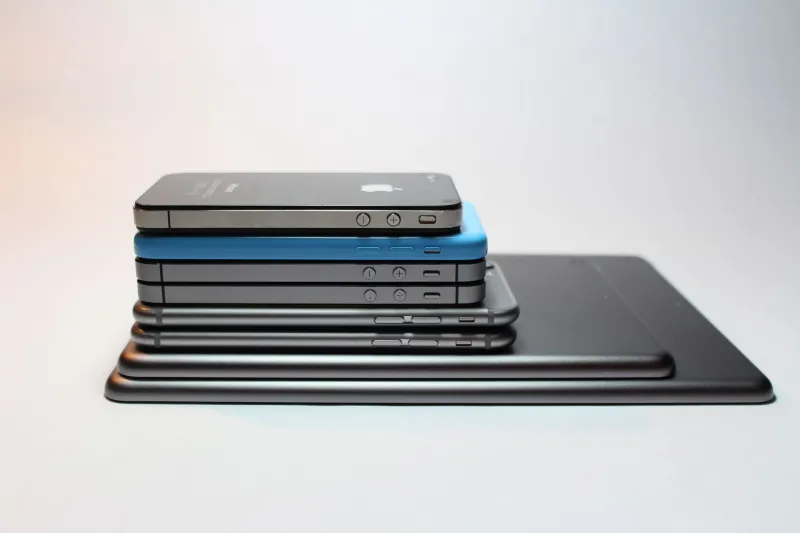
Poll any gathering of Clan members long enough and you'll find people who own — or have owned — multiple versions of the same device in different finishes. The justifications are creative and deeply human.
"I got Space Gray for personal use and Silver for work so I wouldn't mix them up."
"My old one was Gold and I just felt like it was time for something more serious, so I went Graphite."
"They discontinued the Green and I panicked, so I bought a backup."
None of these are crazy. All of them are exactly what Apple's product team hoped would happen. By releasing colorways in waves — sometimes holding back a new finish for a mid-cycle refresh, sometimes making certain colors exclusive to specific storage tiers — Apple creates a soft scarcity that nudges fans toward purchases they might not have otherwise made.
Remember when the iPhone 5c launched in a lineup of bright plastic colors and suddenly people who hadn't planned to upgrade were reconsidering? Or when the MacBook Air came out in Midnight and a wave of Silver MacBook Air owners started feeling like their laptops looked somehow dated, despite being functionally identical? That's the machine working exactly as designed.
The Scarcity Lever
Scarcity marketing is one of the oldest tricks in retail, but Apple applies it with surgical precision. When a specific finish sells out faster than others — which Apple's inventory team absolutely tracks and can influence — it creates the perception that the popular color is the right color. FOMO does the rest.
The limited-time Product RED campaigns are a masterclass in this. By tying the finish to a charitable cause and a defined window, Apple makes the purchase feel both morally justified and time-sensitive. You're not spending money on a color — you're making a statement and supporting a cause, and you'd better do it before it's gone. The fact that a portion of proceeds goes to the Global Fund is genuinely meaningful. The fact that Apple also knows this framing makes you more likely to buy is just good business.
Same goes for the titanium finishes introduced on the iPhone 15 Pro lineup. Natural Titanium, Blue Titanium, White Titanium, Black Titanium — four options, each with a distinct personality, each designed to make the others feel like they're missing something. Clan members reported spending more time agonizing over the finish choice than over the storage configuration, even though the storage decision has far more practical impact on their daily experience.
The Materials Markup Is Real, But So Is the Perception
To be fair, not every price difference is purely psychological. Titanium costs more to work with than aluminum. Ceramic Shield development required genuine R&D investment. The textured matte finish on certain Apple Watch bands involves real manufacturing complexity. Apple isn't always charging you extra for nothing.
But the gap between actual material cost and retail price premium is wide enough to drive a Mac Pro through. The Clan generally understands this. We've seen the teardowns. We know the margins. And yet — and here's the thing that makes Apple's approach genuinely impressive — knowing the markup exists doesn't reliably stop us from paying it.
That's because by the time we're choosing a finish, Apple has already won the larger argument. We've decided we want an Apple product. We've accepted the base price. At that point, an extra $30 or $100 for a finish that feels more us seems like a reasonable final step rather than an additional luxury decision. It's anchoring, and it works beautifully.
So Are We Being Played?
Maybe. Probably. But here's the thing — being aware of a psychological trick doesn't mean falling for it is stupid. Humans are meaning-making creatures. We've decorated our tools since we were painting cave walls. The fact that we want our devices to feel personal, to reflect something about who we are, isn't a character flaw Apple exploited. It's a real human need that Apple figured out how to meet — and charge for.
The Clan isn't made up of suckers. We're made up of people who genuinely love these products and, yes, sometimes spend a little more than strictly necessary to get the version that feels right. There are worse things to spend money on than something you'll touch hundreds of times a day for the next several years.
Would it be nice if Apple charged the same price regardless of finish? Sure. Is that going to happen? Not a chance. In the meantime, the Midnight MacBook Air is objectively gorgeous, and if you need us, we'll be over here wiping fingerprints off it and pretending we don't notice.