One Device In, Five Devices Deep: The Apple Ecosystem and the Beautiful Trap We Walked Into Willingly
Let's be honest about how it usually starts.
Maybe a friend wouldn't stop talking about their iPhone. Maybe your old Android finally gave out at the worst possible moment. Maybe you walked into an Apple Store just to "look around" — and we all know how that ends. You bought an iPhone. It was a reasonable, single purchase. A contained decision.
That was three devices and two subscriptions ago.
Welcome to the Apple ecosystem. You're not leaving.
The First Domino: How It All Begins
Apple doesn't sell you a phone. Apple sells you an entry point. The iPhone is the front door to a carefully constructed world where every product is better when it's surrounded by other Apple products — and where stepping outside that world starts to feel increasingly inconvenient.
The moment you activate an iPhone, the suggestions begin. Your Mac and iPhone can share a clipboard. Your iPad can extend your Mac's display. Your Apple Watch unlocks your Mac automatically. None of these features require you to buy anything else — but each one plants a seed. And seeds, given enough time and a good enough product lineup, grow.
"I bought an iPhone 12 in 2020 and thought I was done," says Brandon K., a marketing manager in Denver. "Two years later I had an Apple Watch, AirPods Pro, a MacBook Air, and a family iCloud plan. I don't even fully remember how it happened. Each thing just made sense at the time."
That's the part that gets you. Each individual purchase does make sense at the time. That's not manipulation — or at least, it doesn't feel like it. It feels like logic.
The Watch Problem (That Isn't Really a Problem)
The Apple Watch is one of the cleaner examples of ecosystem gravity in action. It is, functionally, an iPhone accessory. It requires an iPhone to set up. It works best when your iPhone is nearby. If you switch to Android, your Apple Watch becomes a very expensive step counter.
And yet, the Apple Watch is the best-selling smartwatch on the planet. People don't resent the dependency — they accept it as part of the deal. Because the deal, for most people, is pretty good.
"I got an Apple Watch because my doctor suggested I track my heart rate more closely," says Linda F., a retired teacher in Phoenix. "Then I realized it worked so much better when I had AirPods too, because I could leave my phone in the other room and still hear calls. So I got AirPods. And then I upgraded my phone because my old one couldn't run the newer watchOS features. It snowballed."
Linda now pays for iCloud+ to back up everything. She's not mad about it. "I feel like everything just works together," she says. "I don't have to think about it."
That last sentence is doing a lot of work. "I don't have to think about it" is, arguably, the most powerful thing a tech product can make you feel. And Apple has spent decades engineering exactly that sensation.
AirTags, iCloud, and the Invisible Upsell
Some of Apple's ecosystem hooks are obvious. Others are sneakier.
AirTags are a great example of the latter. On the surface, they're a simple Bluetooth tracker — find your keys, your luggage, your dog's collar. But AirTags work through the Find My network, which is powered by hundreds of millions of Apple devices anonymously relaying location data. The more Apple devices exist in the world, the better AirTags work. You're not just buying a tracker; you're buying into a network that only functions because of the ecosystem.
And then there's iCloud. Apple gives you 5GB free, which sounds fine until you take your first burst of 4K video at a family gathering and realize you've filled it in an afternoon. The upgrade to 50GB is only $0.99 a month. Barely noticeable. The 200GB plan is $2.99. Still reasonable. The 2TB plan — which is what you'll end up on if you have a family with multiple devices all backing up — is $9.99 a month.
None of these prices are outrageous. But they are recurring. And they compound. And once your entire digital life lives in iCloud — your photos, your documents, your device backups, your passwords — leaving Apple becomes a genuinely complicated project.
"I tried to switch to Google Photos once," says Marcus D., a freelance videographer in Nashville. "I spent a weekend trying to migrate fifteen years of photos and gave up. The iCloud lock-in is real. I'm not even mad. I just accepted it."
Brilliant Design, Calculated Strategy, or Just... Convenience?
The honest answer is: all three, and they're not mutually exclusive.
Apple's ecosystem is genuinely well-designed. The Handoff feature that lets you start an email on your iPhone and finish it on your Mac is legitimately useful. Universal Clipboard is a small miracle once you get used to it. AirDrop remains one of the fastest and most painless ways to move files between devices in existence. These aren't gimmicks. They're features that people actually use and miss when they're gone.
At the same time, Apple is not a charity. The ecosystem creates switching costs that benefit Apple directly. The more deeply embedded you are, the less likely you are to leave. That's not conspiracy — it's business strategy, and Apple executes it better than almost anyone in the industry.
"It's like a really nice hotel that makes checkout really difficult," jokes Sarah P., a UX designer in San Francisco. "You love being there, the room service is great, and by the time you're thinking about leaving you realize all your stuff is already unpacked and you kind of just... stay."
The Price of Seamless
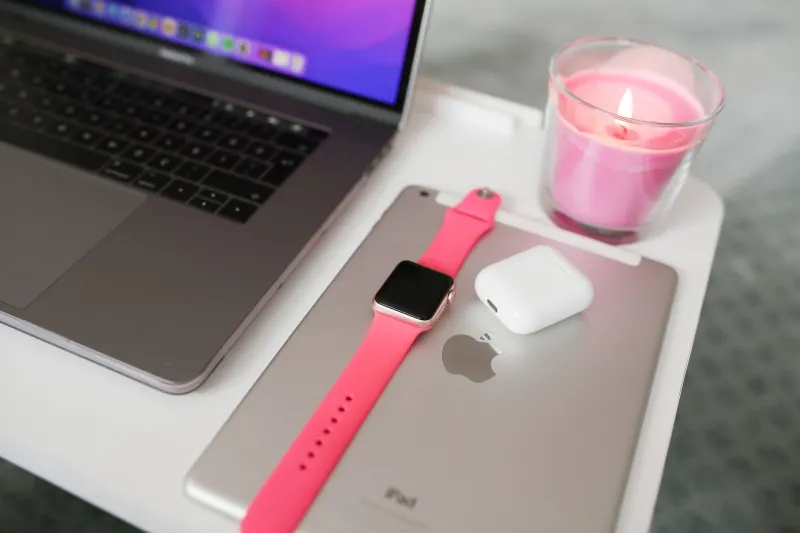
So what does the full ecosystem actually cost? It varies wildly depending on how deep you go, but a rough tally of a fairly typical Apple household — iPhone, MacBook Air, Apple Watch, AirPods, iPad, and an iCloud family plan — can easily clear $5,000 in hardware and $120 a year in subscriptions. And that's before AppleCare, Apple TV+, or the Apple One bundle.
Is it worth it? For a lot of clan members, the answer is an unambiguous yes. The integration, the longevity of the devices, the resale value, the software support — it adds up to a premium that many people feel is justified.
But worth noting: the ecosystem works best when you're all in. Half-measures are frustrating. One Android phone in a house full of Apple devices creates friction. One Windows PC breaks the clipboard-sharing magic. Apple's world rewards commitment and gently penalizes hedging.
Why We Don't Mind the Trap
Here's the thing about calling it a trap — it implies we didn't see it coming, or that we're stuck against our will. But most Apple ecosystem members are pretty clear-eyed about what they've signed up for.
They chose convenience over flexibility. They chose integration over independence. They chose a world where everything talks to everything else, even if that world has a toll.
And most of them, given the chance to do it over, would make the same choice.
"I know I'm in the ecosystem," says Brandon K., back in Denver. "I know I'm probably spending more than I need to. But everything works, nothing fights me, and I don't have to spend my weekends troubleshooting. For me, that's worth every penny."
For the Apple clan, that's usually where the argument ends. Not with a bang, but with a shrug and a MacBook that's already synced to your phone before you even sit down.
One device in. Five devices deep. And honestly? We're fine.