The Quiet MVPs: Apple Products That Deserve Way More Credit Than They Get
Walk into any Apple Store and you know what gets all the attention. The iPhones gleam under the lights. The MacBooks are propped open at that perfect 70-degree angle. Everyone gravitates toward the flashy stuff.
But tucked in corners, displayed almost as an afterthought, are some of the most genuinely useful things Apple makes. Products that don't headline keynotes or trend on Twitter. Products that power users quietly depend on every single day — and that most people walk right past.
This one's for those products. The unsung heroes of the clan.
AirTag: The Little Disk That Changed Everything
Let's start with the one that sounds the most boring and turns out to be the most life-changing.
When Apple launched AirTag in April 2021, the tech press shrugged. "It's a Tile competitor," they said. "Nothing revolutionary." Three years later, Clan members won't shut up about them — in the best possible way.
Jamie, a freelance photographer based in Austin, keeps AirTags in every camera bag, her car, and her checked luggage when she travels for shoots. "I had an airline lose my equipment bag last year. Filed the claim, opened the Find My app, and walked the airline employee directly to it — it was in a back storage room. That tag paid for itself a thousand times over."
Parents have put them in kids' backpacks. Dog owners slip them onto collars. One Clan member in Chicago told us he put one in his elderly father's jacket after a health scare. "It's not a GPS tracker in the creepy sense. It's just knowing. Knowing where the things — and people — you love actually are."
At $29 a pop (or $99 for a four-pack), AirTag is one of the cheapest meaningful Apple purchases you can make. It deserves more shine.
HomePod Mini: The Sleeper Hit in Your Kitchen
The full-size HomePod gets occasional press. The HomePod mini gets almost none. That's a shame, because for $99, it might be the best smart speaker in its price range — especially if you're already deep in the Apple ecosystem.
The sound quality defies its size. Seriously. Set one on your kitchen counter and you'll wonder how that much audio is coming out of something that looks like a grapefruit. But the real magic is how it plays with everything else.
Intercom through your house via Siri. Handoff from your iPhone — walk in the door mid-song and it transfers seamlessly to the HomePod. Thread and HomeKit support for your smart home devices. And with two of them in stereo? It's genuinely impressive audio for a room.
Morgan, a home cook and food blogger from Nashville, has two HomePod minis in her kitchen. "I'm always elbow-deep in something when I need to set a timer or change a song or ask Siri to convert measurements. I don't have to touch my phone. It's just there, listening, being helpful. I forget it's a tech product. It's just part of my kitchen now."
That's the quiet magic of the HomePod mini. It disappears into your life.
The Magic Keyboard with Touch ID: Boring Name, Brilliant Tool
Nobody talks about keyboards at parties. We get it. But if you're working on a Mac desktop — an iMac or Mac Mini — and you haven't upgraded to the Magic Keyboard with Touch ID, you're leaving one of the smoothest daily experiences in computing on the table.
The Touch ID integration means you authenticate with your fingerprint just like you do on a MacBook. No typing passwords. No waiting. Just tap and go. For anyone who works with sensitive files, uses password managers, or simply logs in and out of their machine frequently, this is a genuine productivity upgrade.
The keyboard itself is also just... really good. The key travel, the scissor mechanism, the compact layout. It's the kind of peripheral that makes you realize how much a bad keyboard was quietly draining your energy.
"I bought the Magic Keyboard with Touch ID when I switched to a Mac Mini setup," says Derek, a software developer in Seattle. "I didn't think it would matter that much. Now I feel mildly annoyed whenever I have to use any other keyboard. Apple ruined keyboards for me and I'm fine with that."
Apple Pencil (2nd Gen): Not Just for Artists
The narrative around the Apple Pencil is that it's a tool for illustrators and designers. That framing has kept a lot of people from discovering how genuinely useful it is for everyday tasks.
Taking handwritten notes in meetings. Annotating PDFs. Signing documents without printing them. Sketching out a rough floor plan when you're rearranging furniture. These are not artist tasks — these are Tuesday tasks.
The second-generation Pencil (compatible with newer iPad Pro and iPad Air models) charges magnetically by just snapping to the side of your iPad. No caps to lose. No dongles. It's one of those Apple details that sounds small until you've used a competitor's stylus and realized how much those small details matter.
"I'm an accountant. I'm not drawing anything," laughs Priya, who works in Denver. "But I annotate financial documents all day on my iPad with the Pencil. It's faster than typing comments, more precise than my finger, and my clients love getting back marked-up PDFs that look clean and professional. It changed how I work."
The Takeaway: The Best Apple Products Aren't Always the Loudest
Apple's marketing machine is world-class at making you want the next iPhone or the latest MacBook. And those products are great — we're not here to knock them.
But the Clan knows something the casual observer doesn't: some of the most satisfying Apple purchases are the ones that don't come with a splashy launch event. They're the ones you discover, integrate into your routine, and then quietly wonder how you ever got along without.
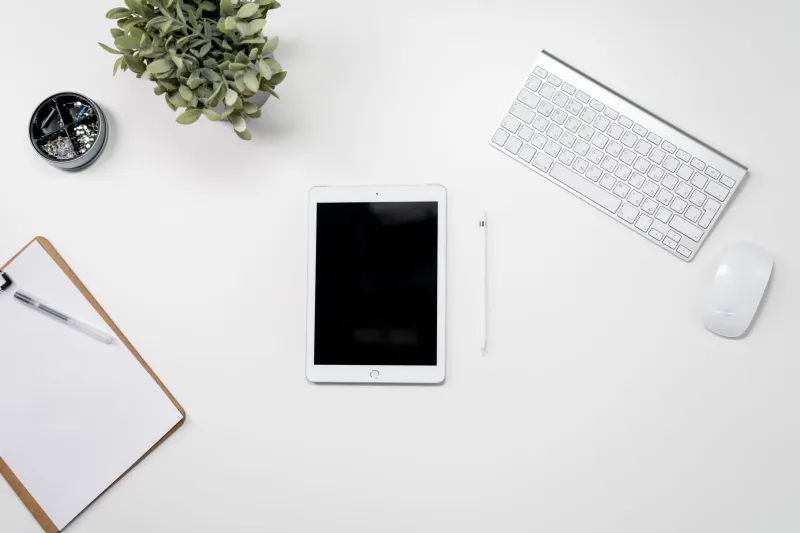
AirTag in your bag. HomePod mini on your counter. Magic Keyboard under your fingers. Apple Pencil beside your iPad.
These aren't accessories. They're the glue that holds the whole beautiful, interconnected Apple world together. And they deserve every bit of love the Clan can give them.