The Streak Trap: When Apple Watch Rings Start Running Your Life Instead of Your Week
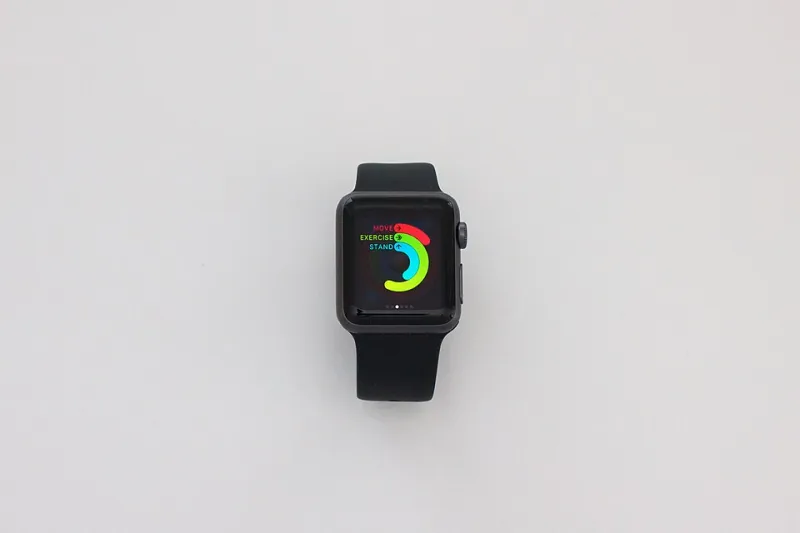
Photo: Peter Parkes, CC BY 2.0, via Wikimedia Commons
The Watch does not shout. That is what makes it so effective. It sits on your wrist, cheerfully summarizing your week, and then it tells you that you closed every ring for 214 days straight. No pressure. Just a fact. A lovely, glowing, quietly terrifying fact.
The Clan loves a good streak. We are a group that will defend a bezel and a connector for years, so naturally we took a fitness feature and turned it into a personality.
Perfect Month, Perfect Little Liar
A perfect month feels incredible for about ninety minutes. Then the next thought arrives: what about next month?
The problem is that the streaks do not measure health. They measure consistency of a specific calculation. If you spent an hour in the garage carrying boxes, congratulations, you may have logged 340 calories without the Watch noticing much of it. If you swam laps with the band loose, good luck. If your resting heart rate had a rough night, that Move goal looks different than your actual body feels.
Options: talk to a doctor, talk to your friend, or walk in place at 11:48 p.m. in a hotel bathroom in Des Moines. Many Clan members have chosen that third one. We asked. They are not proud of it. Some are a little proud of it.
The Sharing Thing Is Not a Sharing Thing
Activity sharing turned the Watch into a social network with a heart rate sensor. On paper, it is motivational. In practice, it can be a leaderboard with feelings.
There is the friend who closes her rings by 9 a.m. and posts it, which is inspiring on a Monday and faintly hostile by Friday. There is the cousin who started a competition and then won it by walking a golf course twice a week. There is the group of five where three of them have quietly gone inactive and everyone pretends not to notice.
Apple has fine-tuned this over the years, adding adjustments for rest days and the general messiness of real life. It helps. It does not fully solve the part where your streak becomes a small public statement about who you are.
The Guilt Hangover
Breaking a long streak does not feel like a missed workout. It feels like the end of a project. Clan members describe it the same way: a weird, disproportionate gloom, followed by the temptation to game it back. One reader told us she walked around her apartment at 11:50 p.m. for days before finally letting the streak die on a Tuesday, then felt strangely relieved.
That is the real insight. The ring is not the hard part. The release is. Once the number resets, most people discover that nobody noticed, nobody cared, and the badge was never the reason they started moving in the first place.
Wearing It Without Being Worn By It
The healthier pattern among devoted Watch people is not quitting. It is resizing the goals so they fit an actual life instead of a fantasy one. Lower the Move target. Use the rest day options instead of treating them like a confession. Turn off sharing when a competition stops being fun. Take the Watch off for a weekend and see how it feels, because the Watch is a tool and not a supervisor.
Some Clan members have gone further, dropping daily tracking during vacations so the rings can take a break too. Others keep the streak alive but happily skip the guilt, closing a quiet loop with themselves: movement for the body, data for the curious, nothing for the audience.
The Verdict
The Activity rings are one of the genuinely great ideas in wearable tech: a simple, glanceable nudge that helped a lot of people build habits they never thought they would. The tools work. It is the emotional scaffolding we build around them that needs occasional maintenance.
So close the rings. Enjoy the milestones. Take the screenshot. Just remember that the number resetting to zero does not reset anything about you, and the Clan could use a little more of that attitude in its group chats.